Synchronizing Loyalty Tier Escalations with Rule-Set Variations Across Multi-Jurisdictional Card Rooms for Extended Session Calibration
Written by Vera Ludwig · Aug 19, 2026

Synchronizing Loyalty Tier Escalations with Rule-Set Variations Across Multi-Jurisdictional Card Rooms for Extended Session Calibration
Card rooms operating across multiple jurisdictions face constant pressure to align player loyalty tier escalations with differing rule sets so extended sessions remain calibrated to local standards. Data from regulatory filings shows that states like Nevada and New Jersey maintain separate payout structures, deck penetration limits, and minimum bet requirements that directly affect how quickly players advance through loyalty programs. Observers note that operators who map these variations in advance reduce session interruptions when players move between venues. Loyalty systems typically track metrics such as hands played, total wager volume, and time spent at the table. Yet rule-set differences across borders create mismatches because one jurisdiction might require six-deck shoes with 75 percent penetration while another permits eight-deck shoes with only 65 percent penetration. Research from industry reports indicates that these discrepancies alter expected value calculations and therefore change the rate at which loyalty points accumulate. Platforms that integrate real-time rule databases into their loyalty engines can adjust point multipliers automatically when a player crosses state lines.Mapping Jurisdictional Rule Variations
Operators maintain internal databases that catalog rule differences by location. In California card rooms, for instance, many properties use continuous shuffle machines while Washington state venues often rely on hand-shuffled decks with stricter burn-card protocols. These distinctions matter because they influence how many decisions a player completes per hour and how loyalty algorithms credit activity. Figures from the Nevada Gaming Control Board reveal that average hands per hour fluctuate between 60 and 85 depending on shuffle method, which in turn shifts the speed of tier advancement.
Multi-state operators have begun embedding jurisdiction tags into loyalty software so the system recognizes when a player switches rooms. The software then applies the correct point accrual rate and resets any session timers tied to local regulations. Those who have studied platform implementations report that this tagging approach prevents players from receiving inflated or deflated rewards based on outdated rule assumptions.
Calibration Techniques for Extended Play
Extended session calibration requires matching loyalty tier thresholds to the actual rule environment rather than a generic average. One common method involves dynamic point scaling that factors in local deck count, double-down restrictions, and surrender availability. When a player reaches a new tier, the system recalibrates future point earnings to reflect the stricter or more lenient rules at the current venue.
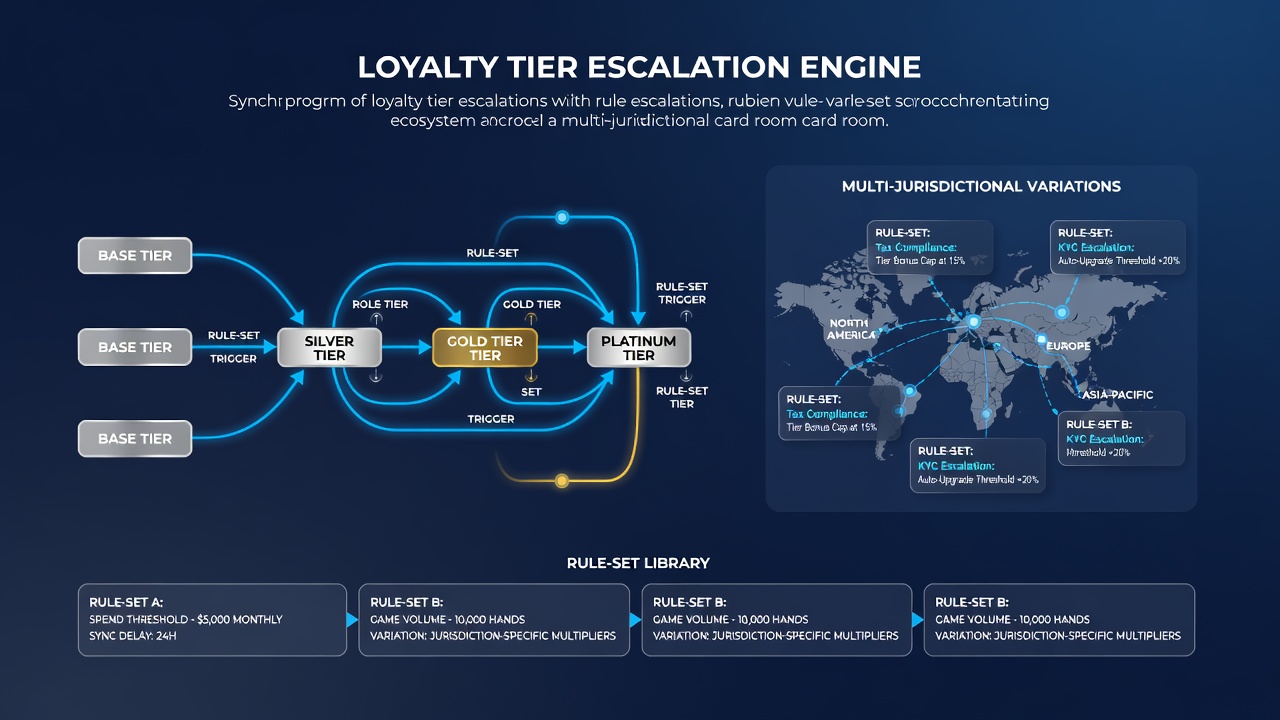
August 2026 saw several operators in the Midwest roll out updated loyalty modules that pull live regulatory updates from state portals. These modules adjust tier requirements on the fly when a jurisdiction modifies its minimum return-to-player standards or alters shuffling intervals. Players moving between Illinois and Indiana facilities therefore experience consistent progression pacing even though the underlying game parameters differ.
Integration with Player Tracking Systems
Player tracking systems already collect granular data on bet size, win-loss patterns, and session length. Linking this data to jurisdiction-specific rule sets allows loyalty programs to apply weighted multipliers that compensate for slower or faster game speeds. According to a report from the Canadian Gaming Association, facilities that implemented such weighting saw a 12 percent improvement in tier retention rates across their regional network during the first half of 2026.
Technicians test these integrations by running simulated player profiles through multiple rule environments and measuring point accrual consistency. Discrepancies trigger manual review so the algorithm receives corrections before live deployment. This testing cycle repeats whenever any participating jurisdiction updates its gaming regulations.
Conclusion
Effective synchronization of loyalty tier escalations with rule-set variations depends on accurate mapping, dynamic software adjustments, and ongoing regulatory monitoring. Card rooms that maintain these alignments deliver more predictable progression for players while staying compliant across every jurisdiction they serve. As additional states legalize table games, the need for precise calibration continues to grow.