Matching Blackjack Outcome Matrices to Milestone Triggers in Simulator Training Environments
Written by Vera Ludwig · Aug 19, 2026
Matching Blackjack Outcome Matrices to Milestone Triggers in Simulator Training Environments
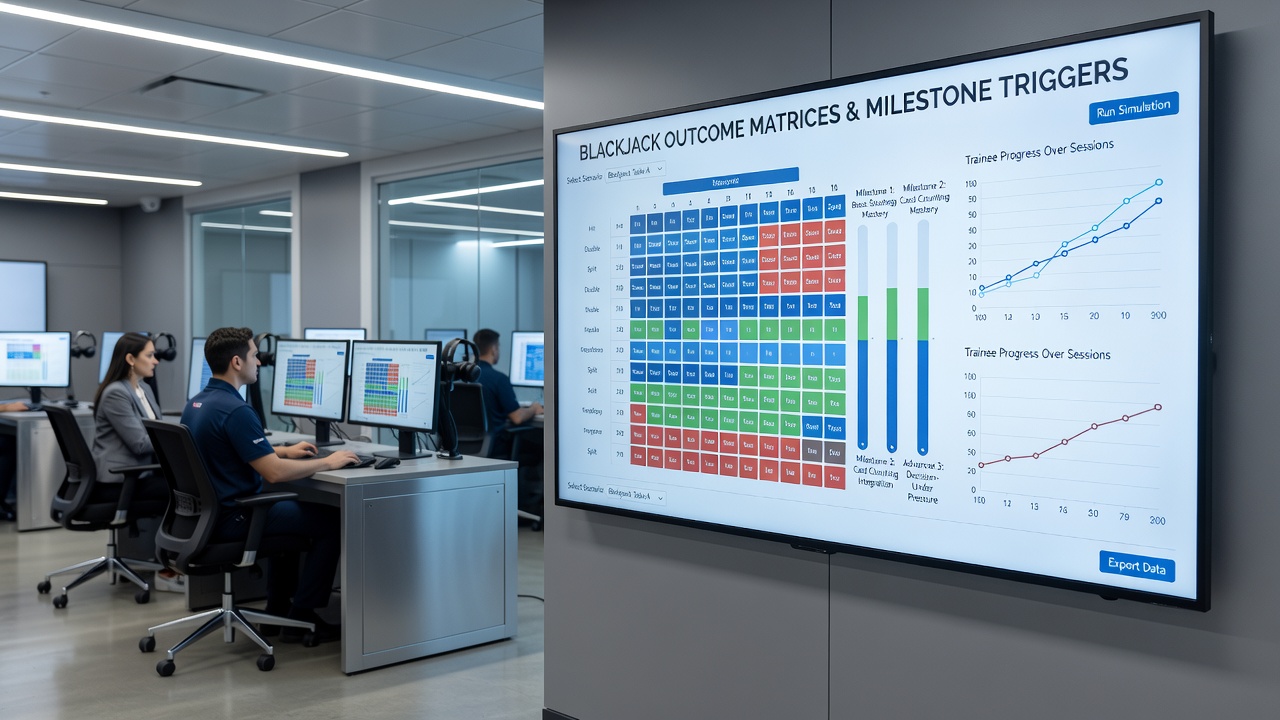
Simulator training environments for blackjack rely on structured outcome matrices that map probabilities for player decisions across thousands of hand combinations while milestone triggers activate at predefined performance thresholds such as accuracy rates or session completion counts. These matrices compile data from standard rules including dealer hit on soft 17 and double after split options then feed into training modules where triggers release new scenarios or performance reports once users reach specific benchmarks.
Core Components of Outcome Matrices
Blackjack outcome matrices organize results by player total dealer upcard and action choices with each cell containing win push and loss percentages derived from combinatorial analysis. Researchers at academic institutions have compiled these grids using exhaustive enumeration methods that calculate exact values for finite deck scenarios whereas infinite deck approximations appear in many commercial simulators. Data from multiple sources shows matrices typically cover 200 to 400 unique decision points per rule set with updates applied when regulatory changes alter payout structures or deck penetration limits.
Training platforms integrate these matrices through backend algorithms that compare user selections against optimal entries and log deviations in real time. When a user completes a set number of hands the system cross references logged outcomes with the matrix to generate deviation heat maps that highlight recurring errors. Observers note this process allows simulators to adapt difficulty by unlocking advanced rule variations once baseline accuracy milestones are met.
Milestone Trigger Mechanics
Milestone triggers function as conditional flags within the simulator software that respond to cumulative metrics such as consecutive correct basic strategy applications or total hands played without exceeding a preset error threshold. These triggers connect directly to the outcome matrix by pulling specific probability subsets for the next training block for instance shifting from single deck to multi deck configurations after a user demonstrates 95 percent adherence over 500 hands. Industry reports indicate that such synchronization reduces training time by aligning practice volume with measurable progress markers rather than fixed session lengths.
Technical Integration Process
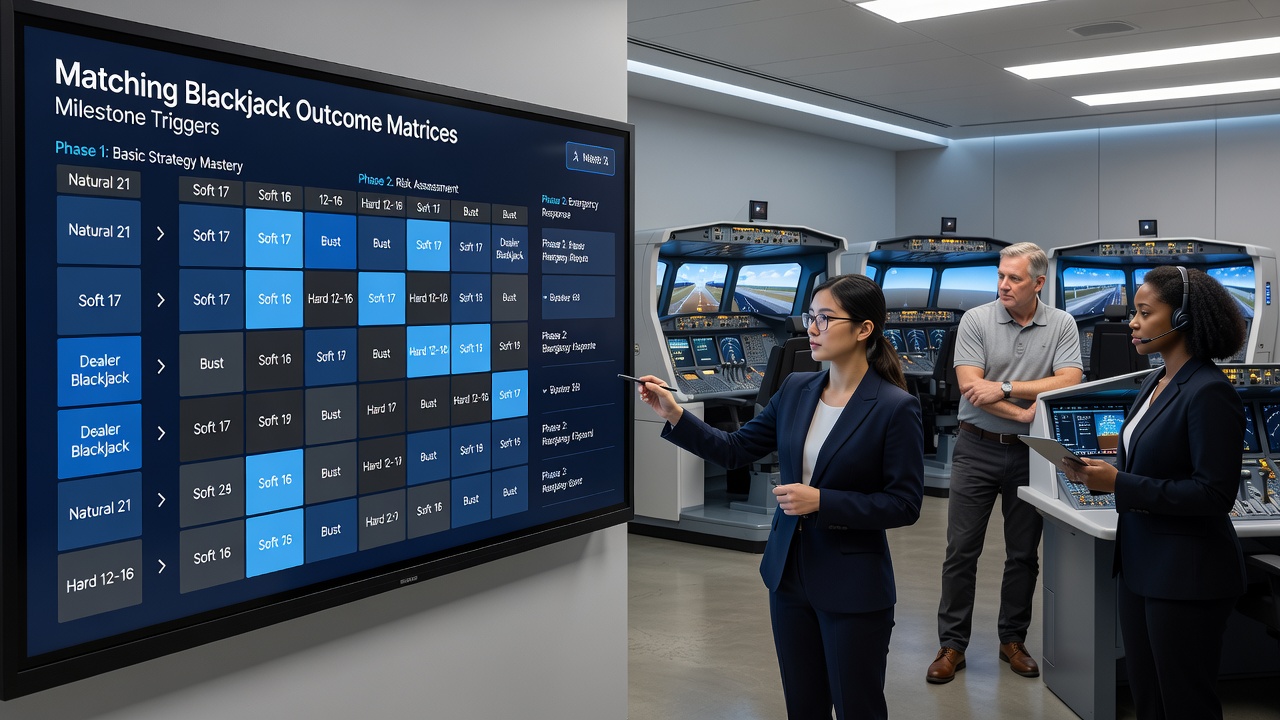
Developers align matrices to triggers through modular code structures where each matrix row links to a trigger condition stored in a separate database table. When runtime data matches a milestone the simulator loads corresponding matrix segments into active memory for immediate feedback delivery. This approach supports scalability across multiple rule variants without requiring full matrix reloads during active sessions. Figures from platform usage logs reveal that synchronized systems process up to 10,000 hands per user account monthly with trigger events occurring at average intervals of 250 hands.
One documented implementation in multi state training networks matches matrix entries for surrender decisions to triggers that unlock progressive betting strategy modules. The system evaluates surrender accuracy against matrix values and activates the next phase only after users maintain correct rates above 90 percent across varied dealer upcards. Such layering ensures progressive skill building while maintaining data integrity across distributed simulator instances.
Applications in Regulated Training Programs
Regulated environments in North America employ these matched systems within certified training platforms used by casino staff and independent learners alike. The Nevada Gaming Control Board maintains oversight records showing increased adoption of matrix triggered simulators in staff certification courses since early 2025 with session data logged for compliance audits. In parallel Canadian provincial regulators have referenced similar tools in responsible gaming research that examines how milestone feedback influences decision patterns over extended practice periods.
August 2026 updates to several commercial simulator packages introduced enhanced matrix granularity for side bet outcomes which now trigger specialized modules once users complete core game milestones. These additions draw from expanded combinatorial datasets that account for progressive jackpot contributions and their impact on overall expected value calculations.
Future Alignment Trends
Current development focuses on real time matrix updates that adjust trigger thresholds based on aggregate user performance across networked simulators. Research institutions continue to publish refined probability tables that incorporate regional rule differences allowing platforms to swap matrix subsets when users select specific jurisdictional settings. Evidence from ongoing projects indicates that tighter integration between outcome data and milestone logic supports more precise measurement of skill transfer from simulated to live environments.
Conclusion
Matching blackjack outcome matrices to milestone triggers creates structured pathways through simulator training that connect raw probability data with progressive achievement markers. This alignment supports consistent skill development across varied rule sets and regulatory contexts while enabling detailed performance tracking. As platforms evolve the synchronization methods continue to draw from expanding datasets and compliance requirements that shape how training environments deliver targeted practice experiences.