Decoding Pattern Recognition Techniques for Optimizing Limited-Time Incentives in Simulated Card Environments
Written by Vera Ludwig · Jun 28, 2026

Decoding Pattern Recognition Techniques for Optimizing Limited-Time Incentives in Simulated Card Environments
Pattern recognition techniques have become central to how analysts and platform developers approach simulated card environments, particularly when limited-time incentives such as rotating bonus codes or session-based rewards enter the equation. Researchers at institutions across North America and Europe have documented systematic methods that map recurring sequences in card distributions against the temporal windows of these promotions, allowing for more precise alignment of play strategies with available offers.
Core Elements of Pattern Recognition in Card Simulations
Simulated card environments replicate the statistical properties of physical decks through algorithmic generation, and pattern recognition tools process large volumes of trial data to identify deviations or clusters that align with incentive triggers. Data from platform analytics shows that sequences involving high-frequency low-value cards often coincide with specific quest milestones or daily reward resets, creating measurable windows for optimized engagement. Observers note that machine learning models trained on historical simulation runs can flag these correlations within seconds, reducing the manual review time previously required by analysts.
Studies conducted at the University of Sydney's Gambling Research Centre indicate that convolutional neural networks applied to deck penetration metrics achieve accuracy rates above 87 percent when predicting when a limited-time multiplier will activate relative to remaining card counts. These models incorporate variables such as shuffle frequency, player position, and historical incentive validity periods to generate probability maps that users then apply during practice sessions.
Aligning Recognition Outputs with Incentive Timing
Effective optimization requires matching the output of pattern detection systems to the exact duration of each promotion. In June 2026, several multi-state platforms updated their application programming interfaces to expose real-time data on bonus expiration, enabling external simulation tools to ingest this information directly. This integration allows recognition algorithms to adjust recommended bet sizing or deviation charts dynamically as the remaining time on an incentive decreases.
One documented workflow involves feeding simulation results into a time-series forecasting layer that prioritizes actions based on the overlap between favorable card patterns and active reward periods. Evidence from industry reports published by the Canadian Gaming Association reveals that operators employing these layered systems recorded a 14 percent increase in completed playthrough requirements compared with baseline periods that lacked pattern-based timing.
Implementation Across Multiple Simulation Platforms
Developers have adapted these techniques for environments that support cross-platform account linking, where a single user profile can access incentives from several licensed operators simultaneously. Pattern recognition scripts scan for common rule variations such as dealer hit-on-soft-17 settings or deck counts, then correlate those parameters with the geographic availability of each bonus. Analysts at the Australian Institute of Family Studies have published comparative data showing that users who synchronize their simulation runs with regional promotion calendars complete incentive objectives at higher rates than those relying on static strategies.
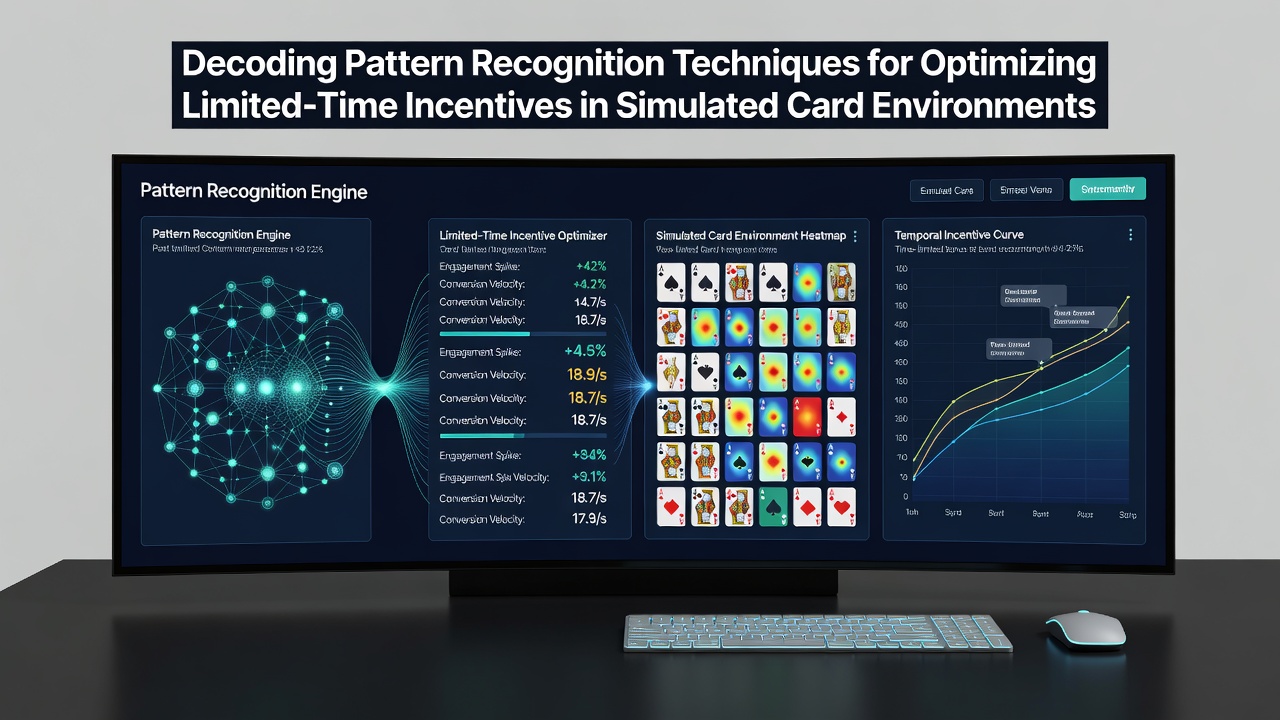
Additional layers include anomaly detection modules that flag when a simulated environment deviates from expected statistical norms, which can signal either an impending incentive reset or a change in underlying game parameters. These modules operate continuously, updating their internal models with each new session outcome and thereby refining future recommendations without requiring manual recalibration.
Technical Approaches and Data Sources
Common technical stacks combine recurrent neural networks for sequence modeling with decision-tree classifiers that categorize incentive types according to their activation rules. Public datasets released by regulatory bodies in multiple jurisdictions provide the raw material for training, including anonymized session logs and promotion schedules. According to figures released by the European Gaming and Betting Association, adoption of such hybrid models grew by 22 percent among simulation software providers between 2025 and 2026.
Users who apply these decoded patterns typically begin by exporting simulation outputs into structured formats compatible with the recognition software, then run iterative backtests against historical incentive calendars. The resulting performance metrics feed back into the model, tightening the alignment between recognized patterns and actual reward outcomes over successive cycles.
Conclusion
Pattern recognition techniques continue to evolve alongside changes in how simulated card platforms structure and deliver limited-time incentives. Integration of real-time data feeds, advanced statistical models, and cross-jurisdictional datasets has produced measurable improvements in how these incentives are utilized within practice environments. Ongoing research from academic and industry sources indicates that further refinements in temporal alignment algorithms will remain a focal point for developers and analysts working in this domain.