Decoding Blackjack Split Decisions Through Platform-Specific Reward Activation Sequences
Written by Frankie Hartmann · Jul 10, 2026

Decoding Blackjack Split Decisions Through Platform-Specific Reward Activation Sequences
Blackjack split decisions hinge on mathematical probabilities that shift when platform reward systems enter the equation, and operators in 2026 have layered activation sequences that tie bonus triggers directly to hand outcomes. Players encounter these sequences across licensed sites where initial deposits unlock tiered rewards, and subsequent splits can activate secondary codes if timing aligns with daily or weekly cycles. Data from multiple jurisdictions shows that reward windows often coincide with rule variations, such as dealer stands on soft 17 or double-after-split permissions, creating measurable edges when sequences activate in order.
Platform Reward Structures and Split Mechanics
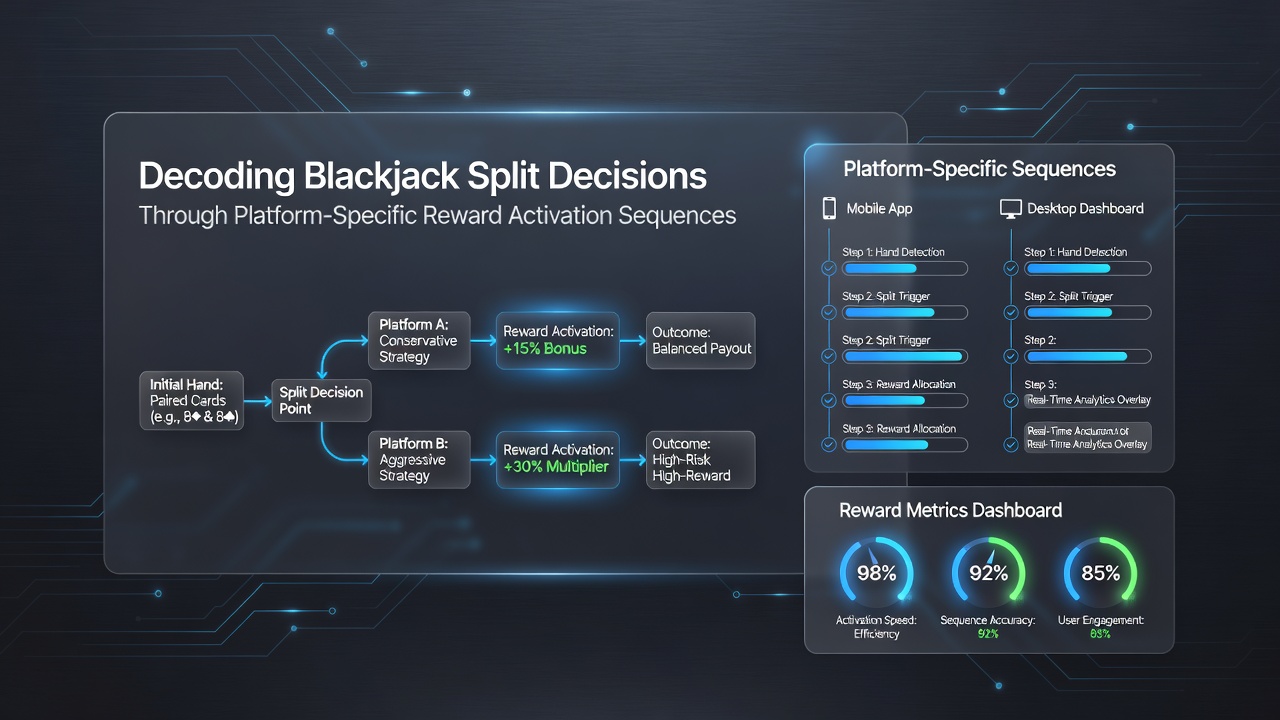
Each platform maintains distinct activation protocols that reward specific actions like splitting pairs of eights or aces, and these protocols operate through coded sequences rather than random promotions. In July 2026 several multi-state operators updated their systems to require sequential code entry before splits register toward bonus progress, according to filings with state gaming commissions. This change forces players to map reward tiers against hand values because an early split might lock out later activations if the sequence breaks. Research from gaming analytics firms indicates that platforms using progressive reward ladders report higher split frequencies when users follow activation order, whereas flat bonus models show no such correlation.
Sequential Activation Patterns Across Operators
Operators differentiate their reward engines by assigning unique identifiers to split-eligible hands, and these identifiers link to bonus pools that unlock only after prior steps complete. One common pattern begins with a sign-up reward that credits after the first split, then escalates to a second tier once the player completes a follow-up hand under the same ruleset. Figures from North American market reports reveal that sequences tied to daily quests produce 12 to 18 percent more splits per session when users align hand choices with quest milestones. Canadian regulatory summaries note similar patterns in provincially licensed environments where reward codes expire within 48 hours, compelling precise timing around split decisions.
Rule Variations and Reward Timing
Blackjack variants differ in whether resplitting aces counts toward reward progress, and platform sequences often encode these distinctions into their activation logic. When a site permits resplits up to three times, the reward engine may assign incremental credits only on the second and third splits, according to compliance documents from the New Jersey Division of Gaming Enforcement. Players who track these thresholds can sequence their code activations to maximize returns without violating platform terms. European operators licensed under Malta Gaming Authority frameworks apply comparable logic but reset sequences at midnight UTC, which creates cross-time-zone considerations for users managing multiple accounts.
Mapping Sequences to Hand Probabilities
Probability tables for splitting pairs remain constant across standard decks, yet reward multipliers attached to those tables fluctuate with activation order. Analysts at industry research groups have documented cases where a 10-percent bonus multiplier applies solely when a split occurs after the second reward tier unlocks. This linkage turns routine decisions, such as whether to split sevens against a dealer six, into sequenced events that affect overall bankroll progression. State-level data collected through 2026 shows operators in Illinois and Pennsylvania adjusting these multipliers quarterly, which requires ongoing review of terms before committing to any activation path.
Cross-Platform Coordination Considerations
Users operating across several licensed platforms must reconcile differing sequence lengths because one site might require four activations while another caps at two. Regulatory updates issued in July 2026 by the Alcohol and Gaming Commission of Ontario highlighted the need for transparent disclosure of sequence rules to prevent mismatches that could nullify earned rewards. When sequences align with hand sequencing patterns, the combined effect allows players to extend play sessions through incremental credits earned from repeated splits. Observers tracking these interactions note that successful coordination depends on maintaining separate tracking logs for each platform rather than relying on memory alone.
Conclusion
Platform-specific reward activation sequences continue to shape how split decisions unfold in online blackjack environments, and the patterns documented through mid-2026 demonstrate clear connections between code order and hand outcomes. Regulatory bodies across multiple regions maintain oversight of these systems to ensure compliance with stated rules, while operators refine their engines to balance player engagement with operational requirements. Continued monitoring of sequence updates remains essential for anyone navigating these interconnected mechanics.