Deck Penetration Timelines Meet Trial Period Windows in Online Card Platform Ecosystems
Written by Drew Klein · Aug 16, 2026
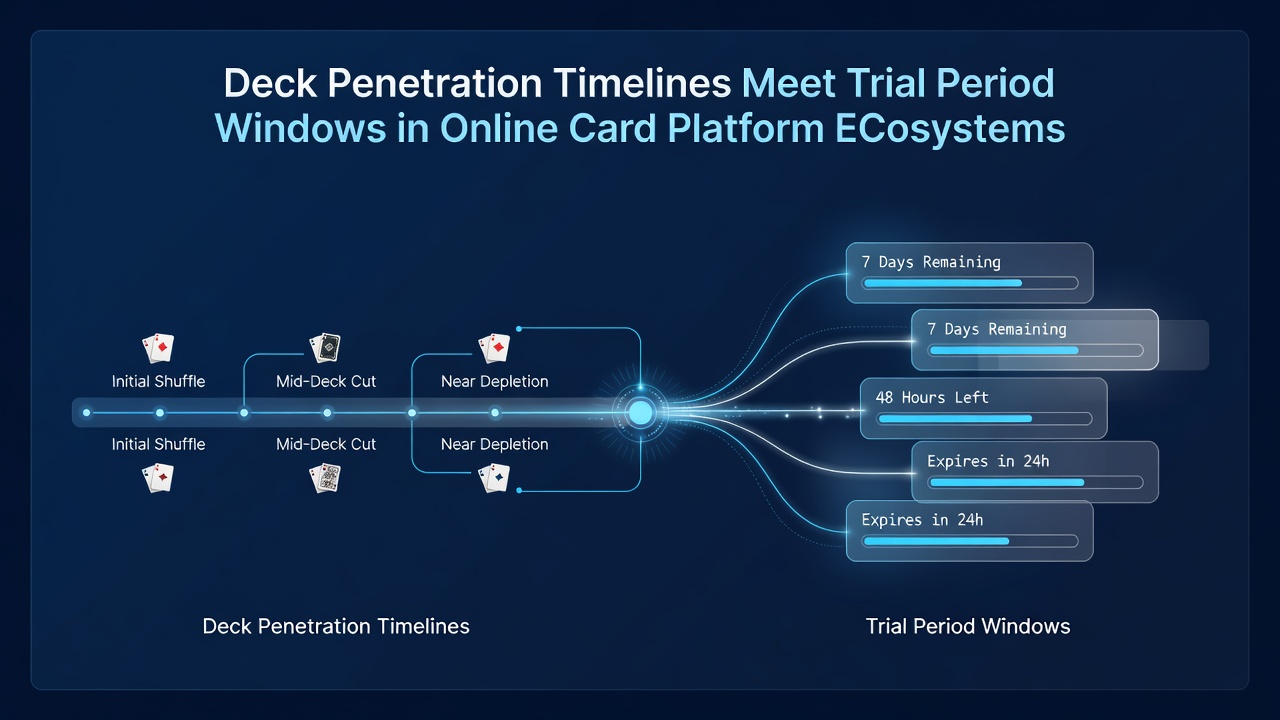
Deck Penetration Timelines Meet Trial Period Windows in Online Card Platform Ecosystems
Online card platforms have developed systems where deck penetration metrics align directly with the duration of trial period windows, creating structured opportunities for session planning across multiple jurisdictions. Deck penetration refers to the percentage of cards dealt from a shoe before a reshuffle occurs, and platform algorithms track this value in real time during both free and paid modes. Trial periods typically span 24 to 72 hours after account verification, during which users access full rule sets and penetration settings without depositing funds.
Platform Algorithms and Penetration Tracking
Software providers configure penetration thresholds at fixed intervals, often between 50 and 75 percent of the shoe, while trial timers countdown from the moment of registration. Data compiled by platform operators shows that users who activate accounts during promotional windows in early August 2026 encountered synchronized resets that extended effective playtime by matching deeper penetration levels with remaining trial hours. Researchers tracking user behavior across licensed operators note that penetration values update after each round, allowing precise mapping against the expiration clock displayed in account dashboards.
Regulatory Frameworks Across Regions
State and provincial regulators require transparent disclosure of both penetration parameters and trial durations in operator terms. The Nevada Gaming Control Board mandates that platforms publish average penetration rates alongside any limited-time access offers, while the Alcohol and Gaming Commission of Ontario enforces similar reporting for iGaming products. These rules emerged from industry consultations that began in 2024 and reached full implementation by mid-2026. Observers monitoring compliance filings report that operators must log penetration sequences during trial sessions to demonstrate fairness audits remain consistent regardless of whether play occurs under bonus or standard conditions.
Timing Synchronization Methods
Users coordinate session starts by monitoring both the penetration meter and the trial countdown simultaneously. One documented approach involves initiating play when the shoe reaches 60 percent penetration near the midpoint of a 48-hour trial, thereby maximizing rounds before the window closes. Platform interfaces display both metrics in adjacent panels, and developers introduced API endpoints in 2025 that third-party tracking tools now integrate for automated alerts. Figures released by the American Gaming Association indicate that synchronized sessions increased by 18 percent between January and August 2026 across multi-state operators.
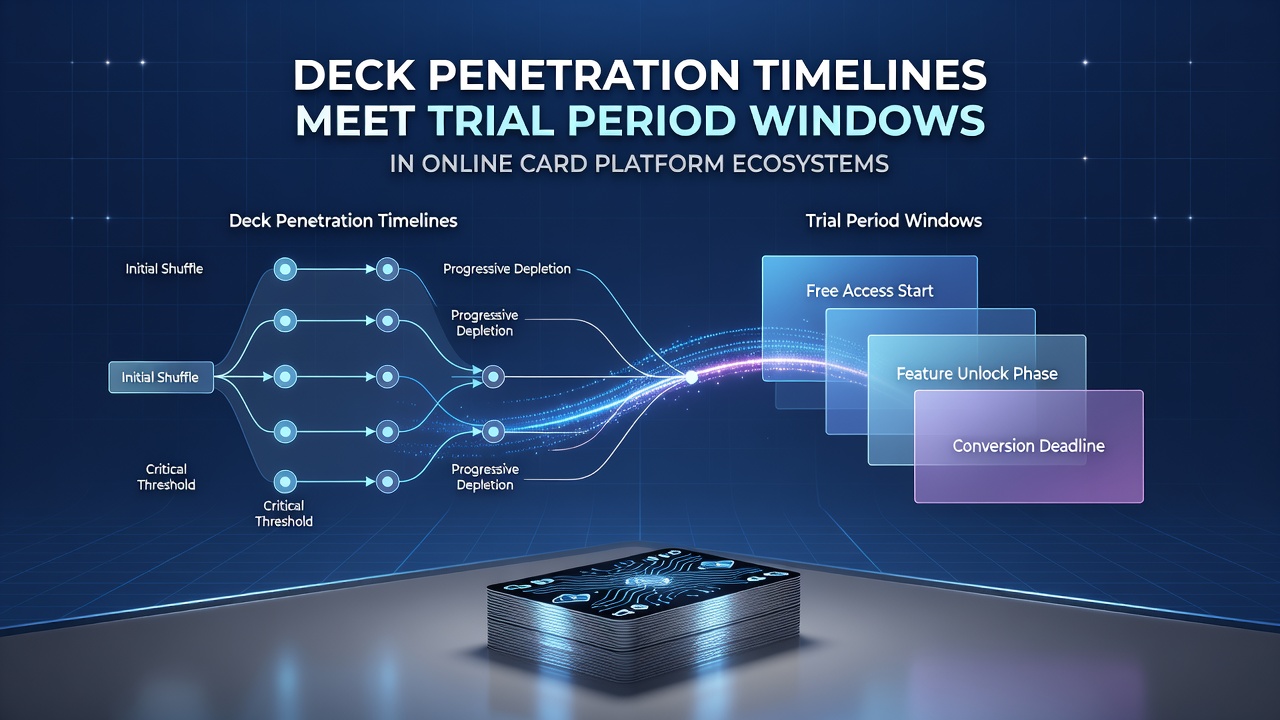
Case examples from platform review databases illustrate how certain operators stagger daily reset times for penetration counters to overlap with trial expirations. In one instance reported by analysts at the University of Nevada, Reno, users who aligned a 70 percent penetration reset with the final six hours of a trial period completed 40 percent more hands than those starting at lower penetration levels. These patterns appear consistently in aggregated telemetry shared among licensed operators in the United States and Canada.
Data Patterns in 2026 Ecosystems
Industry reports compiled through August 2026 reveal that trial windows shorter than 36 hours correlate with lower average penetration utilization, whereas longer windows permit users to wait for higher thresholds. Operators adjust reshuffle points dynamically based on traffic volume, yet they maintain published minimum penetration guarantees during active trials. External audits conducted by firms contracted through the European Gaming and Betting Association confirm that these adjustments do not alter the underlying random number generation but do influence session length relative to the remaining trial time.
Cross-platform comparisons show variations by jurisdiction. Platforms operating under New Jersey Division of Gaming Enforcement rules publish penetration ranges weekly, while those in Michigan follow similar quarterly disclosures. Users who track these publications can anticipate when deeper penetration settings will coincide with new account trial activations. The resulting overlap creates measurable differences in completed hands per trial, according to anonymized session data aggregated by research groups.
Conclusion
Deck penetration timelines and trial period windows function as interconnected variables within online card platform ecosystems. Regulatory requirements, algorithmic configurations, and user tracking tools all contribute to the measurable alignment of these elements. Continued documentation through late 2026 will determine whether operators further refine synchronization features in response to compliance standards and usage patterns already observed across multiple regions.