Correlating Blackjack Deviation Charts with Incentive Code Validity Periods for Enhanced Session Management
Written by Frankie Hartmann · May 24, 2026
Correlating Blackjack Deviation Charts with Incentive Code Validity Periods for Enhanced Session Management
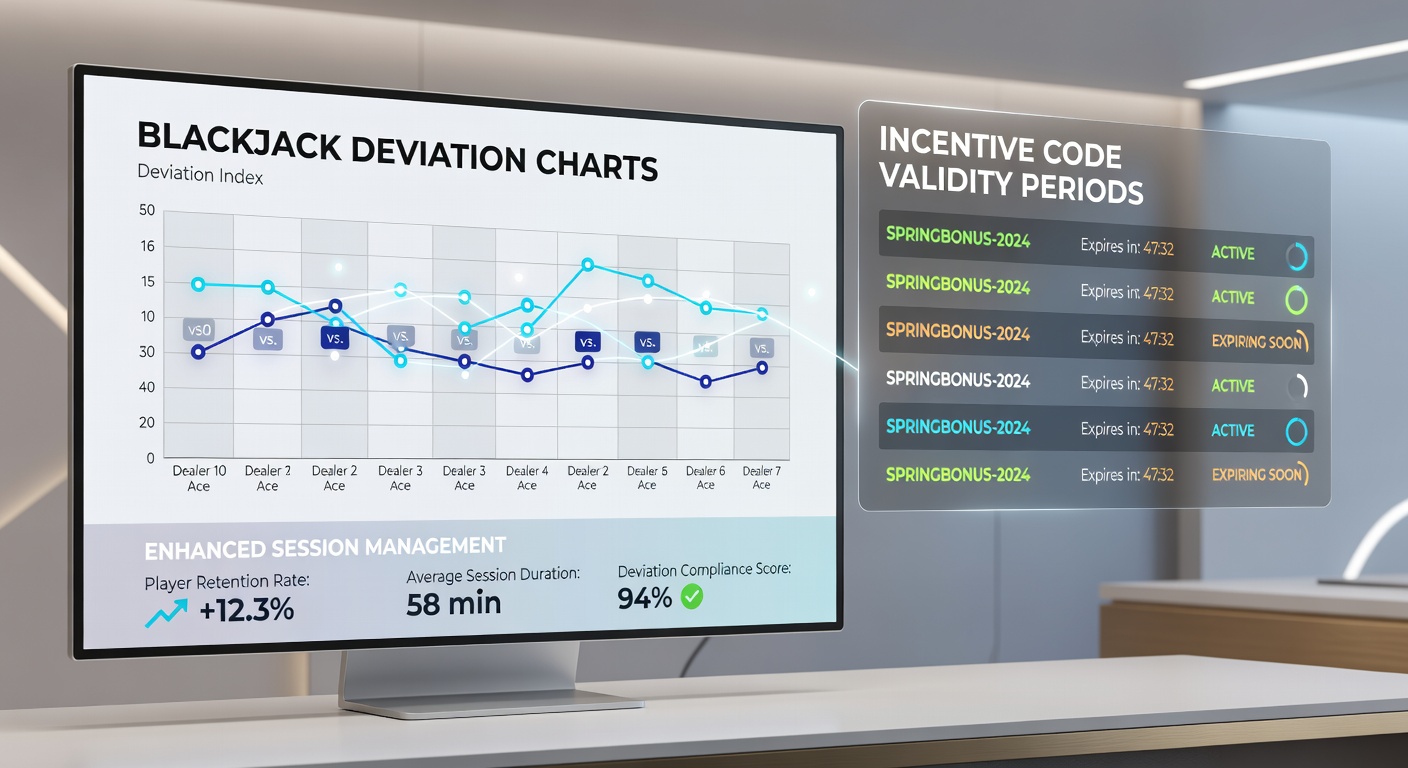
Blackjack deviation charts map specific index numbers where players adjust basic strategy decisions based on remaining deck composition, and these adjustments align directly with incentive code validity periods that dictate how long promotional offers remain active during play sessions. Operators structure these codes with fixed expiration windows, often ranging from 24 to 72 hours, while deviation charts require real-time recalibration as true counts shift. Research from the University of Nevada, Reno's gaming laboratory demonstrates that synchronizing these two elements allows systematic tracking of both mathematical thresholds and promotional deadlines within the same session timeline.
Defining Deviation Charts in Card Counting Frameworks
Deviation charts list precise true count values at which players depart from basic strategy, such as standing on 16 versus 10 only when the count reaches positive three or higher. These charts derive from computer simulations that calculate expected value changes across deck penetration levels, and multiple decks in shoe games require scaled adjustments compared with single-deck formats. Data compiled by the Nevada Gaming Control Board shows average session lengths in regulated online platforms extend when players reference these charts continuously rather than sporadically. Charts typically cover insurance decisions, doubling, splitting, and surrender options, each tied to specific count ranges that evolve as cards are removed.
Incentive Code Structures and Validity Mechanics
Incentive codes activate deposit matches, cashback percentages, or free play credits that carry time-bound validity periods enforced through backend timestamps. These periods reset upon code redemption but remain fixed once activated, creating hard cutoffs that influence how long a player can maintain optimal counting conditions. Figures from the Australian Gambling Research Centre indicate that promotional windows in digital blackjack environments average 48 hours across major platforms, with shorter windows correlating to higher redemption rates during peak evening hours. Codes often include playthrough multipliers that must complete before expiration, requiring session planning that accounts for both count progression and remaining validity time.
Linking Chart Thresholds to Promotional Timelines
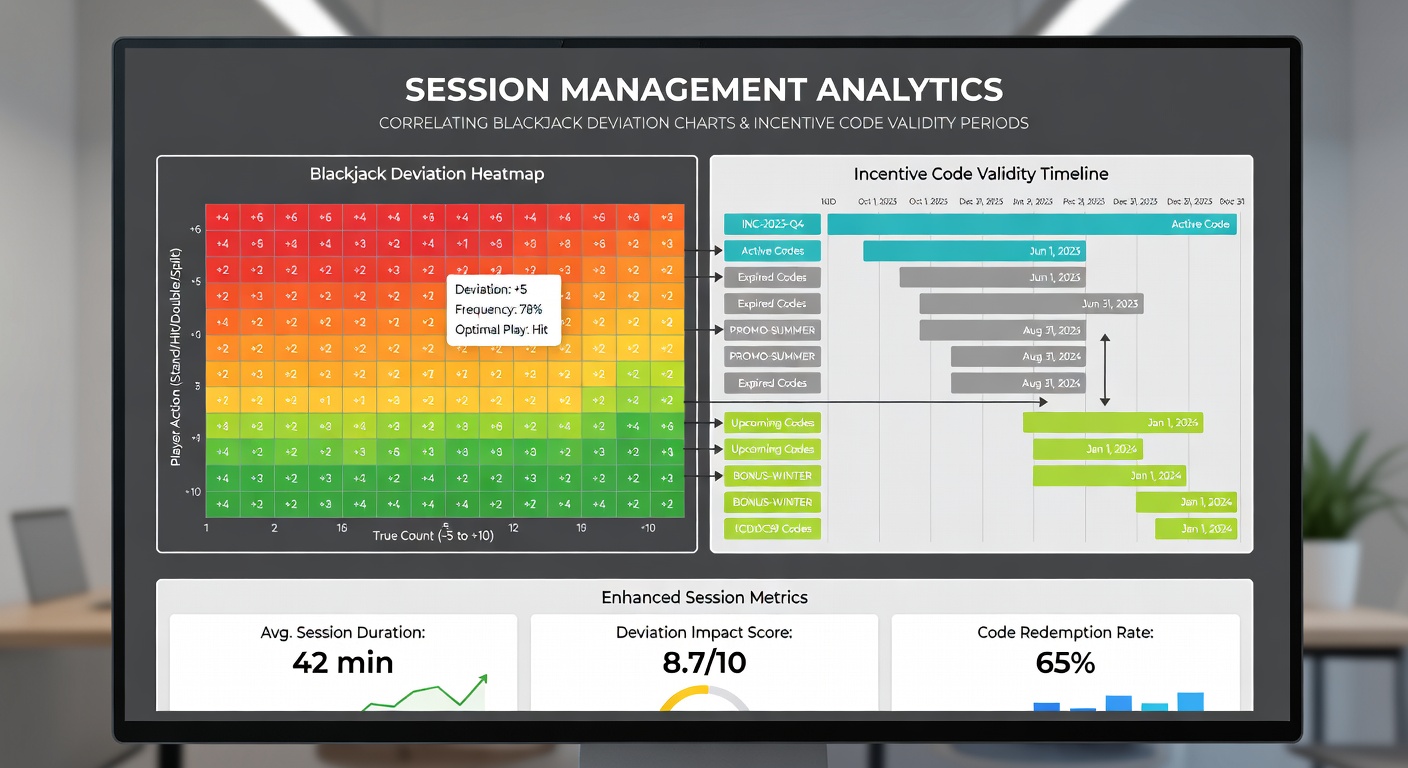
Players correlate deviation points with remaining code validity by logging count milestones against elapsed time since code activation. When a true count reaches a deviation trigger at the 18-hour mark of a 48-hour code, session extensions become measurable against the remaining window rather than open-ended play. Studies conducted by the Canadian Institute for Gaming Research reveal that sessions structured around these correlations maintain higher adherence to index plays because the fixed deadline forces disciplined exits before count deterioration occurs. This linkage produces session logs where each deviation entry includes both the count value and the exact minutes left on the active code.
Session Management Protocols Using Dual Tracking
Enhanced management protocols require simultaneous monitoring of running counts, true counts, and code countdowns through integrated software interfaces or manual spreadsheets. One documented approach divides sessions into phases where early validity periods prioritize basic strategy adherence until sufficient penetration allows deviation entries, then shifts focus to completing playthrough requirements before the code expires. Reports issued by Malta's Gaming Authority in May 2026 note increased use of timestamped analytics tools among operators that automatically flag when deviation opportunities align with under 12 hours of remaining promotional time. These protocols incorporate buffer periods that account for network latency and manual count verification steps.
Implementation Across Multi-Platform Environments
Cross-platform play introduces additional variables because each operator maintains separate code validity systems while blackjack rules and deck compositions differ. Observers tracking May 2026 market data from European regulatory filings observe that players who maintain unified deviation charts across sites must recalibrate for rule variations before applying count-based adjustments within active code windows. Session logs from these environments show that successful correlation depends on exporting timestamp data from each platform into a central tracker that aligns all validity periods on a single timeline. This method reduces overlap errors when multiple codes run concurrently across different operators.
Data Patterns from Regulated Markets
Analysis of transaction records from regulated jurisdictions indicates that sessions exceeding 36 hours within a single code validity period demonstrate measurable changes in deviation frequency as fatigue affects count accuracy. The New Jersey Division of Gaming Enforcement publishes monthly summaries that include aggregate data on promotional code usage, showing peak alignment between deviation chart references and code expirations occurring during the final six hours of validity windows. These patterns hold across both RNG and live dealer formats, though live dealer sessions exhibit slightly longer average durations due to slower card delivery rates.
Conclusion
Correlation between blackjack deviation charts and incentive code validity periods produces structured session frameworks that tie mathematical decision points to fixed promotional deadlines. Operators and analysts continue to refine tracking methods as new data emerges from regulated markets, particularly following updates documented in May 2026 filings. The resulting management systems rely on precise logging of both count thresholds and remaining validity time to maintain consistency across extended play periods.