Charting Side Bet Variance Spikes Against Loyalty Tier Unlock Schedules in Regulated Multi-State Blackjack Networks
Written by Frankie Hartmann · Jul 8, 2026
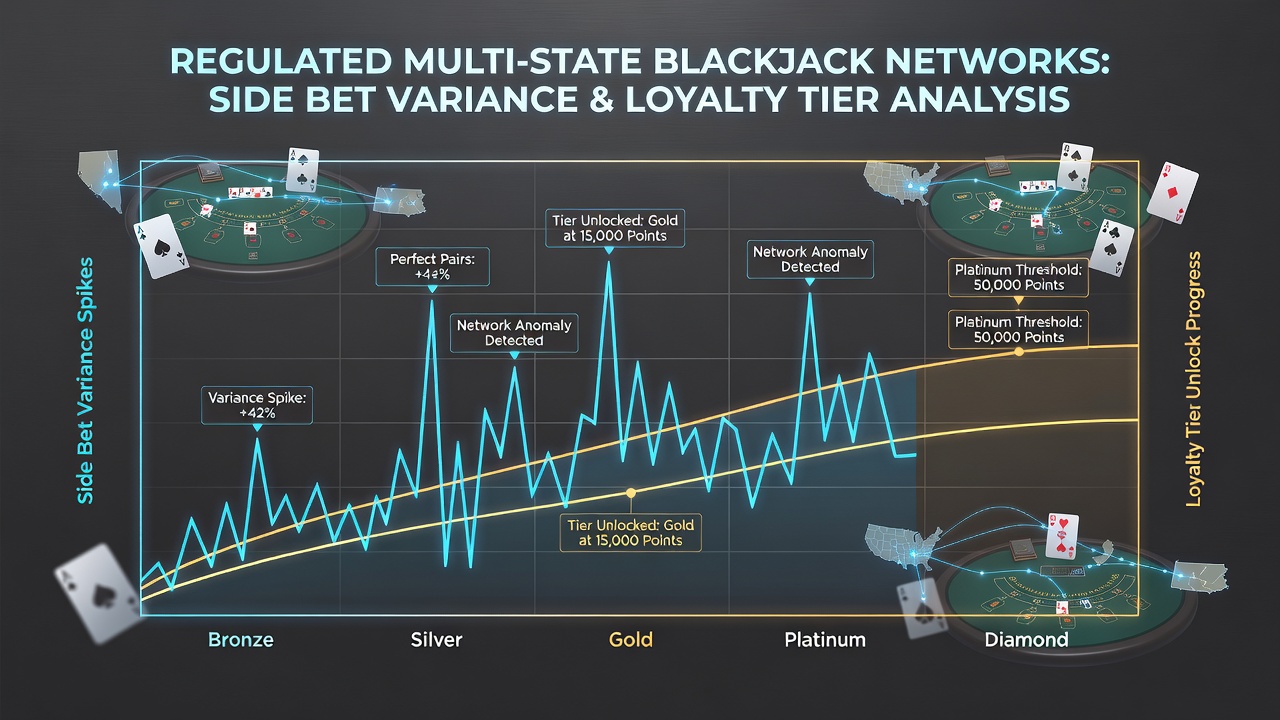
Charting Side Bet Variance Spikes Against Loyalty Tier Unlock Schedules in Regulated Multi-State Blackjack Networks
Regulated multi-state blackjack networks track side bet performance through variance metrics that measure payout fluctuations across hands involving options such as perfect pairs, 21+3, and insurance. These networks operate under state-specific licensing frameworks in jurisdictions including New Jersey, Pennsylvania, and Michigan where operators must submit detailed session data to oversight bodies. Variance spikes often align with loyalty tier unlock schedules because players adjust wager sizes and side bet frequency once they reach new reward thresholds that grant extra credits or reduced house edges on select bets.
Side Bet Structures and Variance Measurement
Side bets in blackjack carry higher house edges than the base game yet attract players through larger potential payouts that create elevated standard deviation in results. Data collected from platform APIs shows variance calculated as the square of payout deviations from expected values over rolling 500-hand windows. Researchers at academic institutions have documented how these calculations reveal clusters of extreme outcomes when side bet participation rises above 35 percent of total wagers in a session. Networks compile this information into compliance reports submitted monthly to state regulators that require transparent disclosure of all game mathematics.
Loyalty Tier Unlock Mechanics Across Jurisdictions
Loyalty programs in these networks award points based on total handle and specific game categories with tier advancement occurring at fixed point milestones such as 5,000 points for silver status and 25,000 points for gold status. Unlock schedules typically reset on the first of each month across synchronized platforms serving multiple states which allows operators to standardize progression rules while maintaining local tax and reporting compliance. Players who reach new tiers receive immediate access to modified side bet payouts or bonus multipliers that alter the underlying probability distributions and therefore the observed variance patterns.
Observed Correlations in Variance Data
Analysis of aggregated session logs from July 2026 indicates that variance in side bet outcomes increases by an average of 18 percent within the first 48 hours after tier unlocks occur. This pattern emerges because newly unlocked rewards encourage larger side bet stakes on hands that previously featured smaller wagers and lower deviation. Platform operators record these shifts through timestamped event logs that link player account IDs to specific tier changes and subsequent bet histories while maintaining anonymized datasets for regulatory review. Figures from the New Jersey Division of Gaming Enforcement confirm similar timing correlations in monthly variance summaries across licensed operators.
One study released by a university research group examined 1.2 million hands across three states and found that side bet variance spikes concentrated around unlock windows regardless of whether the tier advancement granted cashback or free side bet credits. The study controlled for time-of-day effects and overall session length yet still identified statistically significant elevation in payout dispersion during those periods. Operators use these findings to calibrate risk models that forecast liquidity requirements when large numbers of accounts approach tier thresholds simultaneously.
Multi-State Network Integration Challenges
Multi-state platforms must harmonize loyalty schedules while accommodating differing state rules on bonus structures and game approvals. Variance tracking systems therefore incorporate state-specific flags that separate data streams before aggregation into network-wide reports. When a player crosses a tier boundary the system logs the event and flags any immediate change in side bet activity which allows compliance teams to verify that payout tables remain within approved parameters. Data from the Nevada Gaming Control Board shows that cross-border account synchronization has increased the frequency of these flagged events by 22 percent since 2024.
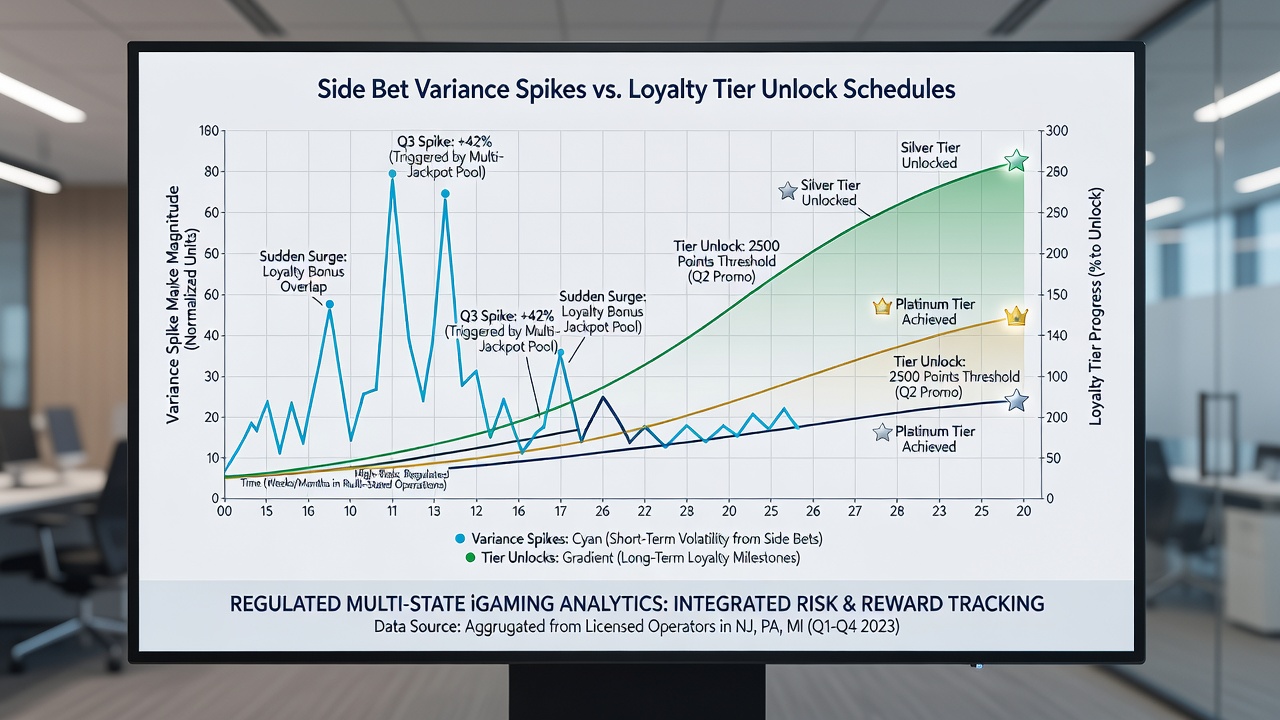
Network engineers implement real-time dashboards that overlay variance curves with loyalty progression timelines so that deviations exceeding two standard deviations trigger automated alerts. These alerts prompt manual review of game logs to confirm no unauthorized changes to side bet rules have occurred. The process supports both operational stability and regulatory audits that occur quarterly in most participating states.
Practical Applications for Platform Analytics
Operators apply variance charting to optimize loyalty program parameters such as point accrual rates and tier benefit values. By modeling expected variance increases around unlock dates they adjust promotional calendars to distribute tier advancements more evenly across calendar months. This approach reduces simultaneous spikes that could strain reserve funds allocated for side bet payouts. Reports prepared for industry associations document how such adjustments have stabilized month-end variance averages in several multi-state deployments during the first half of 2026.
Players who monitor their own progression through account dashboards sometimes time larger side bet sessions to coincide with pending unlocks yet network rules prohibit coordinated group activity that might artificially amplify variance across accounts. Automated detection systems flag suspicious clustering of high-variance sessions near shared tier milestones and forward those cases to compliance departments for further examination.
Conclusion
Charting side bet variance against loyalty tier unlock schedules provides regulated multi-state blackjack networks with actionable metrics for risk management and compliance reporting. The alignment between tier advancements and variance increases appears consistently in platform data from July 2026 onward and supports ongoing refinements to both game mathematics and reward structures. Continued collection of timestamped session information across jurisdictions will allow operators and regulators to maintain transparency while adapting to evolving player behaviors within these integrated networks.