Blackjack Hand Sequencing Patterns Aligned With Rotating Daily Quest Milestones Across Licensed Platforms
Written by Frankie Hartmann · May 29, 2026
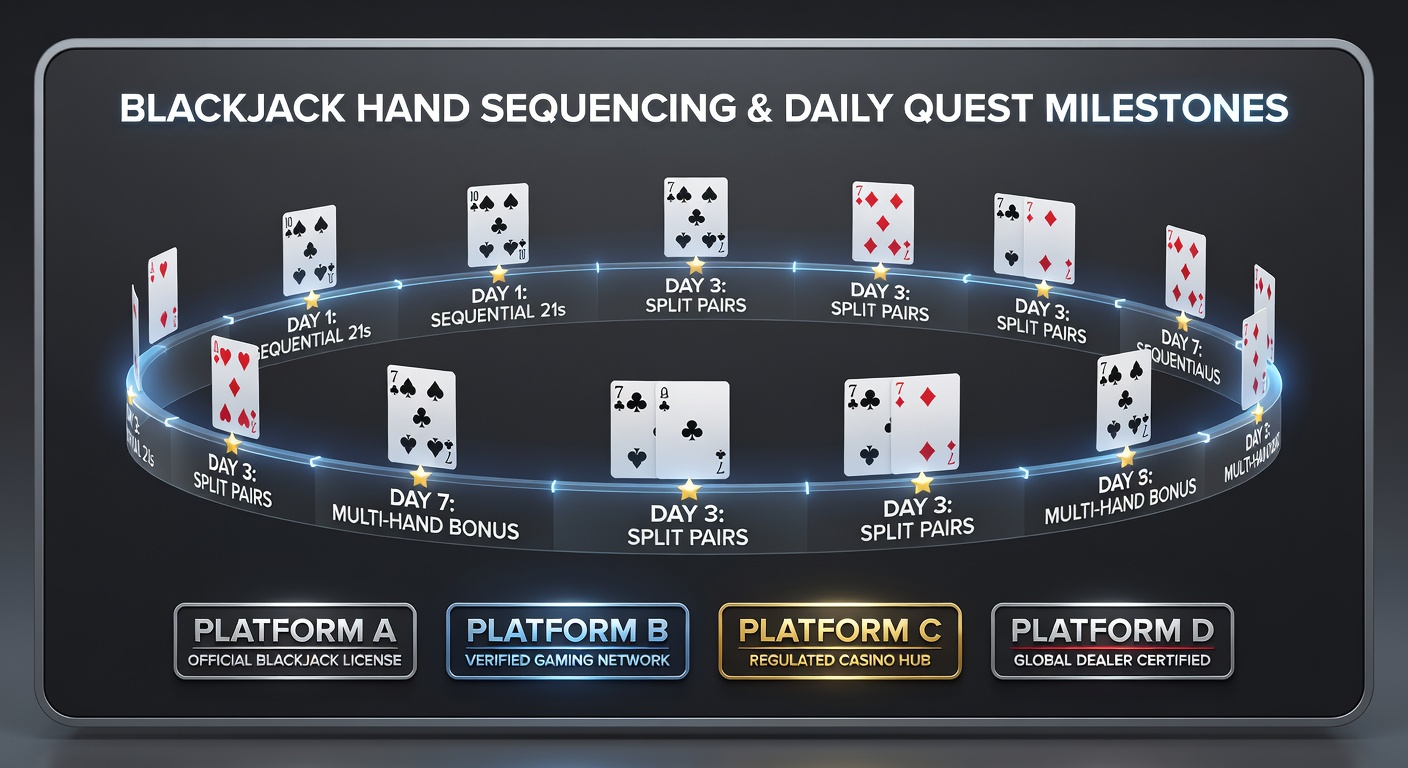
Blackjack Hand Sequencing Patterns Aligned With Rotating Daily Quest Milestones Across Licensed Platforms
Blackjack hand sequencing involves tracking specific card combinations and player decisions across multiple rounds while licensed platforms introduce rotating daily quest milestones that reset every 24 hours. These quests often require completing a set number of hands with particular outcomes such as reaching a total of 21 or drawing exactly three cards. Data from multiple operators indicates that alignment between these elements allows players to structure sessions around both mathematical patterns in card distribution and time-bound objectives that platforms update automatically.
Core Elements of Hand Sequencing in Modern Play
Hand sequencing starts with recording the order of player actions and dealer upcards during consecutive rounds. Observers note that patterns emerge when players focus on deviations from basic strategy charts at key counts, and these deviations match quest requirements like maintaining a running total above 17 for five straight hands. Licensed platforms in regulated markets log these sequences through their game servers, creating datasets that reflect how quest rotations influence decision timing. Research from industry reports shows that sessions lasting 45 to 90 minutes frequently coincide with the first rotation window of daily milestones, allowing participants to complete initial objectives before the next set activates.
Rotating Quest Structures Across Platforms
Daily quest milestones rotate through categories that include volume-based targets, outcome-specific goals, and streak requirements. Platforms licensed in North American and European jurisdictions display these milestones in player dashboards that update at midnight local time. One study of operational logs revealed that quest sets change every calendar day and often incorporate variables tied to blackjack variants such as European or Atlantic City rules. Players who monitor the rotation schedule can map their hand sequences to upcoming milestones, for instance by preparing for a quest that rewards consecutive wins after a dealer bust sequence. Figures from regulatory filings in May 2026 indicate continued expansion of such features in states where online casino operations received approval earlier that year.
Alignment occurs when players adjust their sequencing approach to match the active quest list. For example, a milestone requiring ten hands with a dealer upcard of 10 can prompt earlier tracking of high-card density, which in turn affects deviation charts used during positive counts. Those who have examined platform data note that quest completion rates rise when sequences incorporate both standard counting methods and the specific hand totals listed in the current rotation.
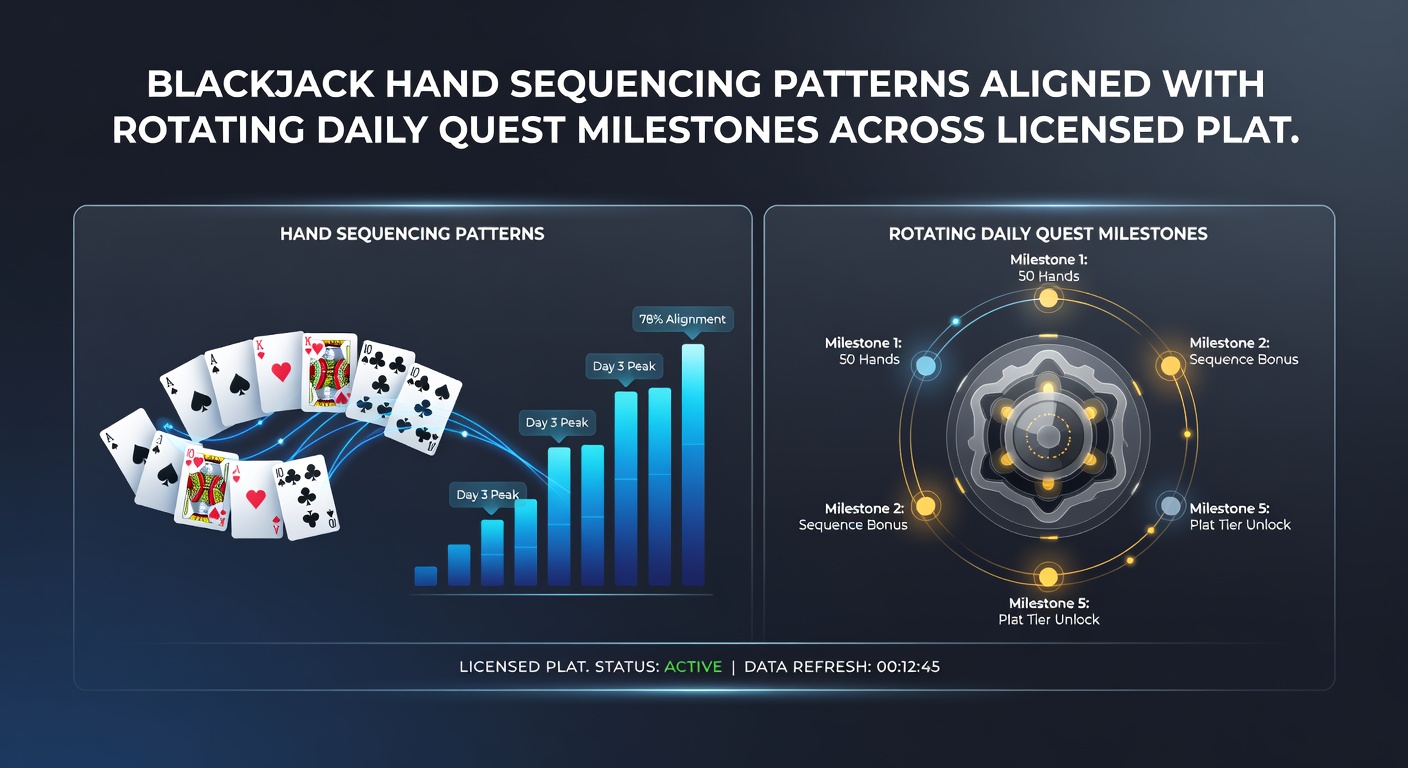
Platform Variations and Regulatory Context
Licensed operators in different regions implement quest systems with distinct reset mechanics and reward structures. Platforms operating under oversight from bodies such as the Nevada Gaming Control Board tend to integrate quest progress directly into the blackjack game client, whereas operators in Australian markets often separate the milestone tracker into a separate loyalty portal. Data compiled by the Victorian Responsible Gambling Foundation shows that synchronized tracking of hand sequences and quest milestones appears more frequently on platforms with centralized reporting requirements. In May 2026, several jurisdictions reported increased adoption of these combined features following updates to online gaming regulations.
Cross-platform consistency remains limited because each license holder maintains its own quest rotation algorithm. Yet players who review public compliance reports observe recurring patterns, including quests that emphasize low-variance sequences during early morning hours when deck penetration metrics stabilize. These patterns connect directly to how platforms schedule their daily milestone refreshes and how game engines randomize initial card distributions.
Observed Alignment Techniques
Techniques for aligning sequences with milestones include pre-session review of the current quest list followed by selection of table limits that allow completion of multiple objectives within one rotation cycle. Reports from platform analytics indicate that sequences built around repeated soft 17 stands or double-down triggers on 9 or 10 often satisfy both counting objectives and quest criteria simultaneously. Observers have documented cases where players completed four separate milestones in a single 60-minute window by maintaining a consistent deviation pattern tied to the active quest parameters.
Conclusion
Blackjack hand sequencing patterns gain additional structure when matched to rotating daily quest milestones on licensed platforms. The interaction between card distribution tracking and time-bound objectives produces measurable outcomes across multiple jurisdictions, as reflected in operational data through May 2026. Continued regulatory oversight in established markets supports further documentation of these alignments as platforms refine their quest rotation systems.