Aligning no deposit trial periods with rule variation databases in platform reviews for precision play adjustments
Written by Drew Klein · Jun 3, 2026
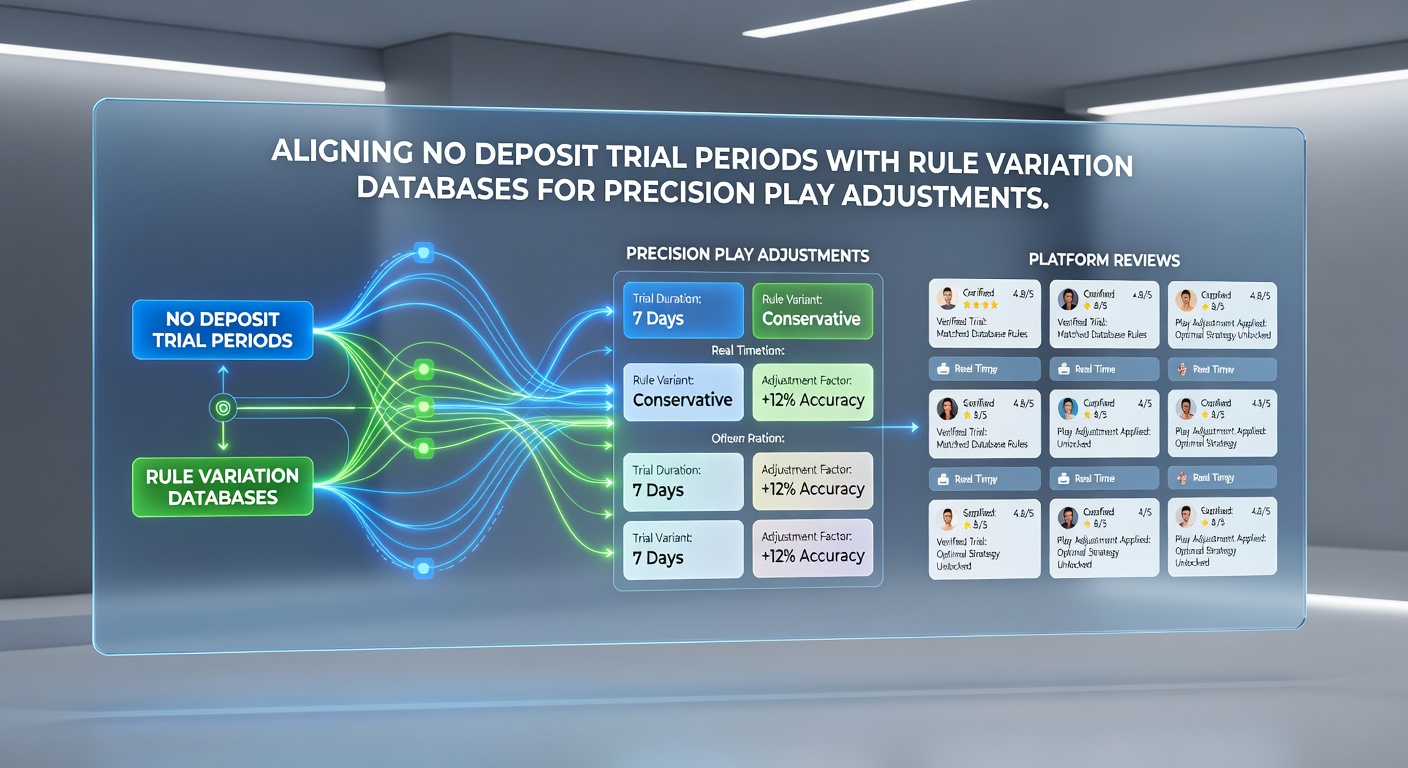
Aligning no deposit trial periods with rule variation databases in platform reviews for precision play adjustments
Platform reviewers routinely cross-check no deposit trial periods against established rule variation databases to support accurate strategy calibration during promotional windows. These databases compile differences such as dealer hit-or-stand rules on soft seventeen, double-down restrictions, and surrender availability across hundreds of blackjack variants offered by licensed operators. When a trial period begins, reviewers note the exact start and end dates supplied by the platform, then query the database to confirm which rule set applies during that window so play adjustments remain consistent with documented conditions. Rule variation databases update on a rolling schedule as operators modify game parameters or introduce new titles. Review teams log each change with timestamps and jurisdiction identifiers, creating searchable entries that link directly to specific game IDs. Alignment occurs when the trial period dates fall within the validity range of a given entry, allowing reviewers to flag any mismatch that could affect expected outcomes. In practice this means pulling the database record for a particular blackjack title, verifying the active rule set, and mapping it against the promotional clock so session planning accounts for the precise parameters in force. June 2026 data releases from multiple North American gaming authorities highlighted increased platform activity around no deposit promotions tied to rule-specific testing periods. Review processes documented in those releases showed operators providing trial access that coincided with scheduled database refreshes, prompting reviewers to re-verify entries mid-cycle. Such timing requires systematic date-range comparisons rather than single-point checks, because a rule change announced on the fifteenth of the month can shift the applicable parameters for any trial still running on the twentieth. Review platforms integrate database queries into standardized checklists that cover trial duration, eligible games, and maximum wager limits. Each checklist item references a corresponding database field so discrepancies surface automatically during the review workflow. For instance, a trial limited to games where doubling after split is prohibited will pull only those database entries where the relevant flag is set to false, thereby narrowing the scope of recommended adjustments before any play begins. This structured matching reduces manual cross-referencing time while maintaining consistency across multiple jurisdictions. Operators publish trial terms that specify the exact blackjack variants included, and reviewers feed those game titles into the database to retrieve current rule profiles. The resulting alignment report lists each variant alongside its active parameters and the remaining days in the trial window. Teams then generate precision play adjustments such as modified deviation charts or bet-spread thresholds that apply only while the trial remains active. Once the period ends, the same database entries serve as the baseline for post-trial analysis without requiring a fresh query cycle.  Industry organizations such as the American Gaming Association publish periodic summaries that track how frequently platforms revise rule sets in conjunction with promotional calendars. These summaries indicate that alignment protocols have become standard practice for reviewers handling multi-state operations, where rule differences between jurisdictions add another layer of complexity. Review teams therefore maintain jurisdiction-tagged filters within the database so a trial offered in one state pulls only the entries valid for that regulatory environment. Additional verification steps include confirming that any rule update scheduled during the trial period will not invalidate the alignment already performed. Reviewers set calendar alerts tied to database timestamps and re-query entries on the day of a planned change. This practice ensures that precision adjustments remain current rather than drifting out of sync with the live rule set. Platforms that provide advance notice of rule modifications allow reviewers to pre-stage updated alignment reports, shortening the turnaround time between change announcement and adjusted play guidance. Data from provincial regulators in Canada, including reports issued by the Alcohol and Gaming Commission of Ontario, illustrate similar alignment procedures applied to iGaming offerings. Those records show trial periods frequently overlapping with database refresh cycles, requiring reviewers to validate rule entries at both the start and midpoint of each promotion. The resulting adjustment frameworks incorporate both the initial rule profile and any anticipated mid-trial shifts, giving players a single reference document that covers the entire window. Review documentation typically archives the final alignment output alongside screenshots of the database query results and the original trial terms. This archive supports later audits and allows subsequent reviewers to replicate the matching process without reconstructing the original query parameters. Over successive review cycles the accumulated records reveal patterns in how trial timing intersects with rule update frequency, informing future scheduling decisions by both operators and review teams.